Posts
Posts


It's Thursday October 28th and we're leaving Lautoka, Fiji this afternoon. We're headed for the island of Tanna, Vanuatu which is about 450 miles from here. We expect to make it there in 4-5 days, and are looking forward to visiting the active volcano. All is well as we've re-fueled, re-provisioned and re-stocked on cooking gas. Topped our Fiji visit off last night with dinner on our boat with friends we made in Bora Bora, an Irish couple circumnavigating from Galway. It was lovely, and, I think we solved the world's problems......
All the best and talk to you soon.
Wednesday, October 27, 2010

Sunday, October 24, 2010
Back in the Water!


 Tomorrow, we head back to Lautoka to fill up our diesel, re-provision, and clear out, and then it's on to Tanna, in the southern part of Vanuatu. We'll be visiting an active volcano there, and spending a few days before leaving for Australia by November 7 or so. We hope to arrive in Australia by late November at the latest, since the cyclone season begins in earnest on December 1.
Wednesday, October 20, 2010
IDG Out of the H2O
 We hauled the ile de Grace out yesterday, Tuesday the 19th. She looks in good shape and we're going to re-paint her hulls and repair our port rudder. The rudder got slightly bent when we hit some shoal coming into Laukoka. Oooops. Work is underway and we'll be back in the water in a few days.
Monday, October 18, 2010
Fiji Time

Sunday evening: arrive from Tonga after 4.5 day sail. As we anchor, we bump a reef hidden in the murky waters, and bend one of our rudders; it won't rotate. Sleep comes slowly as we rue yet another mulligan -- telling ourselves that it could have been worse, and we're within sight of a marina that is the only marina between Tahiti and Australia that can haul us out.


Wednesday: Some last minute shopping in lautoka, and then it's "up anchor" and we motor sail to Musket Cove, an exclusive resort on its own island about 25 miles south-southwest of Lautoka. We arrive without touching bottom (a good thing) and pick up a mooring. Dinghy ashore, check in at the "yacht club," and return to the boat and catch our breath. It's beautiful here -- a far cry from the industrial harbor of Lautoka, with sandy beaches, gorgeously-clear waters, and palm trees swaying on the rounded hilltops behind the resort.
 Thursday: Jennifer connects with Suka, who manages the operations end of the ferry services that shuttles guests to and from the main island to here. Suka has to service the ferries, and has cobbled together a ramp of sorts for the catamarans that he uses -- they're about 70 feet long, and are ideal for the choppy waters. He offers the ramp to cruisers as a favor -- charging a pittance of what we'd pay in Australia. Our labor costs here will be $30/person/DAY-- a generous wage in these parts I hasten to add -- compared to over $50/person/HOUR in Australia. I go back to the main island to buy supplies for painting the bottom -- sandpaper, rags, rollers, etc. I should have bought these in Lautoka, but we were running so fast it just slipped our mind. Ashore, where the ferries land, I encounter a surreal sight: Hard Rock Cafe, Disney-like fountains, golf courses, etc. It's Port Denerou -- a walled-off collection of resorts and upscale shopping and dining facilities catering to wealthy New Zealanders and Australians. I can't get out of there fast enough. It's still raining, as the trough settles over Fiji bringing much-needed water to these parts, so Suka suggests hauling the boat on Monday, since it's supposed to clear up by Sunday.
Friday: A day of rest, after 4 days of near non-stop activity focused on the boat. We take the dinghy to a lovely little sand island -- exposed only at low tide -- where there's a beautiful reef filled with hard and soft corals. Jennifer is tickled pink at being able to snorkel in 18 inches of water, with sand dollars and shells just an arms-length away. We spend the afternoon lazing on the boat, having booked a dive for the next day.
Saturday: The dive boat picks us up at 8:00, and we pick up a few more divers at some of the adjacent islands. We're in Mamanuca group, with dozens of small islands located within a few miles of one another, and many of the islands have small, exclusive resorts on them. We dive two sites -- and at each, we see an amazing collection of hard and soft corals, proof of Fiji's status as the soft coral diving capital of the world. As always, these dives always leave us a bit worse for the wear, and we spend the afternoon resting before heading to shore for a dip in the resort pool.
Sunday: We take care of the boat's weekly chores -- as Jennifer says, "if it doesn't rust, it molds," so we do the routine cleaning that keeps the rust, mold, and dust at bay. That afternoon, we spend the entire time at the pool, swimming, floating, and catching up on email, etc. We meet some other boaters, and then we have a collective barbecue at the hut on the beach -- meet some serious long-time cruisers, most of whom have spent between 5 and 10 years cruising Fiji and Tonga (!).
 Monday: We meet Suka, and go over the haul-out plan -- it turns out we need to re-grade the ramp a bit, and high tide comes in the late afternoon. I spend the morning scrubbing the hull, Jennifer does laundry and vacuuming, and by noon, we're ready for a break. I read a James Lee Burke novel, and Jennifer naps, and then ashore for her to swim some laps and me to pen this post.
So that's a week+ in Fiji -- we haul out tomorrow, and, God willing and the creek don't-rise, we leave here on Saturday, sail BACK to Lautoka, meet with all the various ministries for all the requisite paperwork on Monday, and leave for Vanuatu on Tuesday ... not having spent much time in the island group of Fiji, but needing to make westward progress to be in Australia by late November and the start of cyclone season.
Best to all -- pictures forthcoming, and wish us luck.
Friday, October 15, 2010
Old Songs Don’t Die……
… they just go to the South Pacific. Jon and I have greatly enjoyed the native music as we’ve traveled among the islands of the South Pacific. As noted in earlier blogs, we often try to go the local churches, although we cannot understand the native languages, just to listen to amazing voices singing in four and eight part harmonies. The native drums seem exotic, but guitar and ukulele are the most common instruments.
Since we entered French Polynesia in the Marquesas, we’ve also heard more modern music that reflects a melding of western music with Southern Pacific tastes. There’s a lot of Hip Hop on the radio, but it all tends toward the romantic. Kanye West, Beyonce, and Alicia Keyes love songs were common throughout French Polynesia. Importantly, these songs would be re-recorded by local artists in Tahitian. In the Tuamotus, we met a girl whose favorite song was “You Are My Sunshine.” And it goes without saying that Bob Marley’s reggae holds a special place in their hearts.
Whenever we go to a restaurant/pub that caters to “yachties,” (usually, just a dinghy ride from a harbor to shore), they often are owned by ex-pats (and ex-sailors) from the US, Australia or New Zealand. Their the music is often rock and roll from the 60s and 70s. In Taha, we walked into such a place to the sound of Jimi Hendrix’s “Purple Haze,” followed by the Rolling Stones and then an evening of Delta Blues. It can be a bit disorienting to come off a boat, onto an exotic Polynesian island and the first thing you hear is Jimi Hendrix. We wondered: had we sailed through some sort of time warp? Or had time stood still? Or (for Jon), a flashback? In truth, the music was what the ex-pat misses from home and tends to reflect the music of his youth and when he left it all behind to go semi-native in the tropics. It’s fun, and Jon and I have begun to play predicting games as to what we will and will not hear. I was holding out that we would never hear the band Boston, playing “More Than a Feeling,” but alas, it happened yesterday here in Fiji. (At least I was drinking a Banana Lada to ease the pain! Don't ask.)
But going back to the locals, it has been a surprise to hear how much they love our pop music from the 60s and 70s. Tony Orlando and Dawn. La Bamba. Elton John. Kung Foo Fighting. The Bee Gees. Olivia Newton John. And lots of one-hit-wonders whose songs I remember, but whose names are long forgotten, if ever they were known. In Niue, at a feast night of traditional food, dance and music, we were treated to a Maori version of Carol King’s “Under the Board Walk,” with our host suggesting that she got her version from the island of Niue. (That song is far from a one-hit wonder, and of course, Rickie Lee Jones did an amazing version of it as well.)
What comes through loud and clear is that they adore love songs. In fact, the schmaltzier the better. Two high school teachers we met in Tahiti confirmed that the Polynesians love romance stories and that the boys (as well as the girls) all cry when they read Romeo and Juliet.
When we got to Tonga, we noticed a bit of country twang in the guitar playing, even in the local traditional music. One night, we listened to a local band that had a one string base and banjo in addition to the usual guitars and ukuleles. One guitarist even seemed to play a bit of slide, giving us the hint of country music. They were wonderful. Once we arrived at the main island of Tongatapu, moored just offshore the capitol of Nuku’alofa, however, we heard their full appreciation of country and western music. The Police Band, that is, a guitar and horns band comprised of local policemen, after playing “Save the Last Dance for Me,” segued seamlessly into a trio of Kenny Rogers songs. They love Kenny Rogers in Tonga, and Jon heard him yesterday while shopping for boat supplies on the main island in Fiji. I know I haven’t heard Kenny Rogers since I left Texas in the early 80s. Talk about flashback ….. and I never took LSD!
In short, it’s been a hoot. We’re having fun, and being treated to songs that take us back (sometimes unwillingly) to junior and high school. Needless to say, this music has not been in our listening repertoire for years, but it has served to let us know that old songs don’t die, they just go to the South Pacific.
Tuesday, October 12, 2010
Update
We arrived in Lautoka, Fiji on Sunday evening, but Monday was a holiday (Fiji Day) so we had to stay on the boat (quarantined) until Tuesday morning. Check in with customs, immigration, health, agriculture, cruising permits and getting money took all day. So, here it is Wednesday (we're a day ahead of those in the US), and we're just getting our bearings. We have some boat repairs and work to do, so pictures and blog posts will be forthcoming, but not necessarily prompt.
Peace.
Tuesday, October 5, 2010
Broken Harbors
In 2001, about when I stopped drinking, I decided to take a crack at writing song lyrics -- a reasonably natural extension of my long-standing efforts to write poetry. After a time, I began to try and put these lyrics to music, and a bit later, a few of my friends and I began to assemble in our basements to hammer out these songs with a band. One thing led to another, and before long, we had a band that was known only to ourselves, practicing with reasonable regularity. On drums, my friend Jon Blum, who beat a hasty departure from Chicago under questionable circumstances, kept the rockin' beat. On lead guitar and gruff vocals, my friend Mark Miller, a habitue of certain disreputable Northern Virginian neighborhoods, kept us barely awake with his desert-dry humor. My friend Dan Nathan, really the only bona fide musician of the group (having a jazz combo on the side that plays at spicy restaurants in the area) kept us honest with a borrowed bass, and kept us in tune and on time with his wry asides about the value of playing in sync with one another. Mark suggested the band name we adopted: Broken Harbors -- from the Neil Young song, Tell Me Why. It seems especially appropriate to me now, sitting in the wreck-strewn harbor of Nuku-alofa, Tonga.
After a time, Mark and I made some appearances at Open Mikes, and our little ensemble played a mix of his and my songs. Before leaving on our circumnavigation, we agreed to try and memorialize some of our songs in a studio; before we could make the big leap, Jon Blum took a job that demanded all of his non-family time, so we entered the studio as a threesome, and picked up few studio musicians: one for our beloved departed drummer, as well as a keyboardist. Marco Delmar, of Recording Arts, undertook the not-inconsiderable task of trying to record and mix our decidedly-ragged sound. We chose four of my songs, and an equal number of Mark's -- mine were chosen to reflect a sampling of the over 75 songs I've written, and of the 20 or so we played regularly as a band. They favor the "band" sound, and when I return, I plan to record a number of the more acoustic songs I've written.
The end result of our efforts -- as far as the songs I wrote -- are available here, on a MySpace page. Mark's songs are still in the process of recording and mixing, and we hope to have those up before long. Give it a listen; I'd love your feedback -- we had a lot of fun playing and recording these songs, and I'm really looking forward to returning to the risers and recording studios when we return from our trip in a few years. I've also added the link to the left-hand side of the home page of this blog, for future reference. Feel free to share with friends and foes alike -- the more the merrier. I'll never quit my proverbial day job (I'm currently unemployed!), but music will always play an important part in my life.
I want to extend my deepest thanks to Mark, Dan, and Jon for their friendship and their major contributions to the songs and to my musical growth, and to Marco for his patience and guidance and expertise -- we had a lot of fun, and I feel uncommonly lucky to count each of them as a friend.
After a time, Mark and I made some appearances at Open Mikes, and our little ensemble played a mix of his and my songs. Before leaving on our circumnavigation, we agreed to try and memorialize some of our songs in a studio; before we could make the big leap, Jon Blum took a job that demanded all of his non-family time, so we entered the studio as a threesome, and picked up few studio musicians: one for our beloved departed drummer, as well as a keyboardist. Marco Delmar, of Recording Arts, undertook the not-inconsiderable task of trying to record and mix our decidedly-ragged sound. We chose four of my songs, and an equal number of Mark's -- mine were chosen to reflect a sampling of the over 75 songs I've written, and of the 20 or so we played regularly as a band. They favor the "band" sound, and when I return, I plan to record a number of the more acoustic songs I've written.
The end result of our efforts -- as far as the songs I wrote -- are available here, on a MySpace page. Mark's songs are still in the process of recording and mixing, and we hope to have those up before long. Give it a listen; I'd love your feedback -- we had a lot of fun playing and recording these songs, and I'm really looking forward to returning to the risers and recording studios when we return from our trip in a few years. I've also added the link to the left-hand side of the home page of this blog, for future reference. Feel free to share with friends and foes alike -- the more the merrier. I'll never quit my proverbial day job (I'm currently unemployed!), but music will always play an important part in my life.
I want to extend my deepest thanks to Mark, Dan, and Jon for their friendship and their major contributions to the songs and to my musical growth, and to Marco for his patience and guidance and expertise -- we had a lot of fun, and I feel uncommonly lucky to count each of them as a friend.
Photos of Tonga
 |
| Kayaking ashore to an unihabited Ha'apai island |
 |
| Breaching whale as we sail from Ha'apai to Nuku'alofa |
 |
| Big Mama's on Pagiamotu, just off Nuku'alofa |
 |
| Every dock in Tonga has kids swimming and jumping |
 |
| Ostensibly, a unique palm, with three "tops" |
 |
| Fruit bats -- about 2.5 foot wong span |
 |
| A beachside Tongan resort, the only places that can serve food on Sundays |
 |
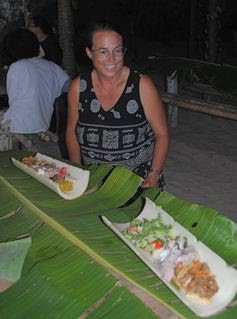
| Jennifer with our "plates" of banana trunk -- Tongan feast |
 |
| Dressed for church; the boy in yellow wants to be a priest |
 |
| The Wesleyan church in Nuko'alofa, with school kids filling the rows |
 |
| Surf on the windward side of Tongatapu |
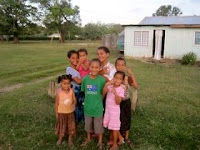 |
| A group of Tongan kids in Lifuka |
 |
| The Ha'apai Public Library in Lifuka |
 |
| Guide to Tongan Government |
 |
| The fish market in Nuku'alofa; these are octopi |
 |
| Starfish are everywhere on the reefs; this one is awash at low tide |
 |
| Tongatapu has a "stonehenge" like feature -- this stands about 20 feet tall and marks the equinoxes |
 |
| Moonrise over a tiny Ha'apai island |
 |
| Jennifer -- alert for whales and reefs |
 |
| Jon -- protecting himself from the blazing sun |
Sunday, October 3, 2010
Aftermath
A few months back a friend sent me a link to a New York Times article on a man who had just sailed for 1,000 days non-stop. He sailed circles around in the Atlantic, and left three years ago with his girlfriend as on-board company. As it happened, she got pregnant, and was ferried to another ship mid-ocean so that he could continue, and his arrival on land was also the occasion of meeting his then 2+ year old son.
 The time in Tonga has been just right; we spent a week in the islands of Vava'u, and have spent the last week daysailing our way south through the desolate Ha'apai islands of Lifuka, Limu, Telekivavau, and Kelefesia. These are largely uninhabited islands, save for the fishing camps that dot these archipelago's shores. At Telekivivau, we met Ofu, who retired from his job as a Tongan Fisheries Ministry official, bought a 40 foot fishing boat, partnered with a Japanese businessman, and now holds one of 7 licenses to harvest the ubiquitous sea cucumber from these waters.
 Ofu told us how they are prepared for export. They are dipped briefly in very hot water, causing their bodies to swell, at which point they are slit open and stored in salt for three days, after which they are boiled for thirty minutes, and then sundried for two weeks. It's an interesting business; we spoke in the 200 meter diameter lagoon adjoining the 2 acre island of Telekivavau; we were the only other boat in the lagoon, and on the shore was a crude plastic tarp shelter with a wood stove and a large cooking pot hanging over the stove. Ofu runs the wholesale side; local fishing boats, none longer than 20 feet or so, with just inches of freeboard, spend days and nights on the water, either free diving for the cucumbers, or use a weighted, barbed spear, juggled from the surface and used to pierce and raise the now-impaled sea cucumber to the surface. When loaded to the gunnels, the boats alight at Telekivavau, offload their catch, and return to sea. At US $25 each, it's not a bad business for the fishermen, and Ofu seems to be doing a bang-up business. When we left him, he was off to one of the other islands to pick up more money to pay the fishermen, leaving behind a small team of Tongans busy dipping sea cucumbers in hot water, salting them, and then laying them out to dry.
 We've sailed past these small Tongan fishing boats, and wondered what they were up to; as we anchor our way around the world, we've come to appreciate the mysteries of the journey and the explanations that often lay waiting at our destinations. We stay here in Tongatapu for a few days, picking up a spare part and fueling up, before leaving for Fiji; another journey and another destination. Unlike the 1000-day sailor, we like both the journey and the destination, but in his honor, I penned the following small tribute:
Clearly he is someone for whom the journey mattered more than the destination. I have been reflecting on that as we get closer to our intermediate destination on our circumnavigation: Australia. We've sailed over 8,500 miles so far, over about 9 months; at an average speed of about 5 knots, give or take, that's 1700 hours underway, or a little over two months at sea. The balance we have spent at anchor, experiencing the newness of different languages, cultures, climes, and weather. I heard someone say that we don't sail around the world, we anchor around the world.
 The time in Tonga has been just right; we spent a week in the islands of Vava'u, and have spent the last week daysailing our way south through the desolate Ha'apai islands of Lifuka, Limu, Telekivavau, and Kelefesia. These are largely uninhabited islands, save for the fishing camps that dot these archipelago's shores. At Telekivivau, we met Ofu, who retired from his job as a Tongan Fisheries Ministry official, bought a 40 foot fishing boat, partnered with a Japanese businessman, and now holds one of 7 licenses to harvest the ubiquitous sea cucumber from these waters.
The sea cucumber is, in shape and appearance, a sea slug; ranging from 1 to 2 feet long, about 5-8 inches in diameter. There are many varieties, but they share one thing in common: they are prized as a delicacy in Asia. Ofu pays a small fleet of local fishermen US $25 each for these cucumbers, and his business is brisk; in a typical week, he'll buy US $7,500 worth of cucumbers for eventual export.
Jennifer and I are very familiar with the sea cucumber; they seem to be everywhere we dive and snorkel, and are probably the most interesting creature I've ever read or heard about. In what can only be described as a Marvel Comics-like ability, sea cucumbers can liquefy their body and squeeze themselves into (and through) impossibly small spaces, only to re-solidify on the other side, and assume their usual configuration. To pull off this stunt, they rely on something called "catch collagen," which can unhook and re-hook the collagen fibers to create an essentially liquid animal. Aquarium keepers take special note of this unique attribute: sea cucumbers can squeeze into pump heads and water filtration systems. Underwater, if you stroke them, they will stiffen and become hard and rigid (no jokes please).
And it's not like they're rare; in deeper waters, sea cucumbers comprise 90 percent of the total mass of the macrofauna, and in New Zealand, they can reach densities of 1,000 animals per square meter. They will form large herds, moving across the deeper floors of our oceans, hunting food (they are scavengers.) When threatened, many varieties can expel parts of their respiratory system from their anus, along with a toxic chemical. Jennifer tried them at a Tongan feast in Vava'u and said they tasted like chewy mushrooms, but the "delicacy" aspect was lost on her.
 Ofu told us how they are prepared for export. They are dipped briefly in very hot water, causing their bodies to swell, at which point they are slit open and stored in salt for three days, after which they are boiled for thirty minutes, and then sundried for two weeks. It's an interesting business; we spoke in the 200 meter diameter lagoon adjoining the 2 acre island of Telekivavau; we were the only other boat in the lagoon, and on the shore was a crude plastic tarp shelter with a wood stove and a large cooking pot hanging over the stove. Ofu runs the wholesale side; local fishing boats, none longer than 20 feet or so, with just inches of freeboard, spend days and nights on the water, either free diving for the cucumbers, or use a weighted, barbed spear, juggled from the surface and used to pierce and raise the now-impaled sea cucumber to the surface. When loaded to the gunnels, the boats alight at Telekivavau, offload their catch, and return to sea. At US $25 each, it's not a bad business for the fishermen, and Ofu seems to be doing a bang-up business. When we left him, he was off to one of the other islands to pick up more money to pay the fishermen, leaving behind a small team of Tongans busy dipping sea cucumbers in hot water, salting them, and then laying them out to dry.
 We've sailed past these small Tongan fishing boats, and wondered what they were up to; as we anchor our way around the world, we've come to appreciate the mysteries of the journey and the explanations that often lay waiting at our destinations. We stay here in Tongatapu for a few days, picking up a spare part and fueling up, before leaving for Fiji; another journey and another destination. Unlike the 1000-day sailor, we like both the journey and the destination, but in his honor, I penned the following small tribute:
Aftermath
As soon as this storm passes --
When seas settle, clouds clear,
As soon as all that, I might go to work:
Repair tattered sails, frayed lines, splintered rails.
Until then, I tend to the battle:
Each wave, each swell, each gust.
I turn my face into the wind and rain,
Spurn shelter in a world that cannot reward
Passages without landfalls, wind without calm.
I dare the weather, and never mind aftermath.
Jon, October 2010
Celebrant

The last few Sundays, Jennifer and I have attended Mass in Tonga, an especially religious kingdom. The Tongan Constitution states that the Sabbath shall be kept sacred, therefore, Sunday is a day of rest. It is illegal to conduct business, as well as to fish or to swim on the Sabbath. This law posed a special challenge for the Seventh day Adventists here, since for them, Saturday is their Sabbath. (We have not yet spotted any synagogues in Tonga.)
Creatively, the Adventists used Tonga's unique position alongside the International Date Line as the basis for a solution. By claiming that Sunday was really Saturday, Tongan Adventists now celebrate their holy day on Sunday and thus align themselves with the rest of Tonga in resting on Sunday.
On our way back from church recently, Jennifer and I took a long walk around the island of Lifuka, and encountered a woman we had seen in church, walking home well after the service had completed. We got to talking, she shared a bit of her story with us, and it led me to write this:
Celebrant
Thank you, Tongan celebrant, for your Rosaries after Mass today;
Thank you for your prayers for the world beyond
This curved island of sand and rock and coral and ash.
Your eleven brothers and sisters, your six children,
The husband who maintains the island generator,
We thank them too for your prayers after Mass,
For postponing their Sunday feast of breadfruit, chicken, taro,
Slow-cooked in the umu. They knew you would be late,
Reciting one Hail Mary after another, each for a supplicant
Unaware and unknown, in far away huts and homes,
Hovering in the hazy Sunday light of this Tongan church,
Illuminated by the prayers of this Tongan celebrant who told me:
"We stay behind to say our prayers for the world."
O Tongan celebrant, in your fraying vala tied snugly over your damp white kofu,
Walking home alone, at noon on a Sunday, down a dusty road:
Who is worthy of such a gift?
Jon, September 2010
Thursday, September 30, 2010
In Ha'apai Group of Tonga
Received at 0024MST 30 SEP 2010 from ile de Grace:
we're in the Ha'apai Group of Tonga (Capital of Tonga), lots of deserted islands, no internet of course, we'll update in a week or so...
--Katie
we're in the Ha'apai Group of Tonga (Capital of Tonga), lots of deserted islands, no internet of course, we'll update in a week or so...
--Katie
Sunday, September 19, 2010
Mother and Calf
The female humpback whale hovered 10 meters below the surface of the sea, motionless except for the nearly imperceptible flicks of her white-splotched, knobby pectoral fins. She looked like a funhouse mirror’s version of a 767 jet – an 40 ton, 15 meter cylindrical body, tapering gently toward the tail; her pectoral fins a set of truncated wings, and a tail fluke with tips that hung horizontally. Her skin was mottled, scraped in places, and the barnacles on her white underbelly and by her mouth were being tended to by several remoras, swimming along her skin and around her mouth. On each side, her eyes were closed; she was resting.
Beneath her, upper body nuzzling the mother’s belly, was her calf – just 10 weeks old, and already a hefty 7 tons. The calf lolled around the underbelly of the mother, then drifted slowly away, and began to ascend, turning as it went to face the five of us, snorkeling in 2000 feet of water, 2 miles from shore, and just 20 meters away from these two wondrous sea mammals. We went to look for whales, here in Vava’u, and now we were snorkeling -- barely remembering to breath -- with a mother-calf pair of humpback whales.
Our first encounter with the whales of Vava’u – nearly all humpbacks coming up from the Antarctic to breed and give birth – ended when the solo whale decided to dive deep and thus we missed a chance to swim with it. Jennifer had entered the water first – that’s her in the yellow-banded mask, as the whale continues to swim; and then, with a casual gliding movement, she lifted her fluke to the vertical, and slid down into the sea. When they dive, their flukes leave an flat slick of water on the surface for several minutes; experienced whale watchers can follow the “fluke prints” for a mile or so.
Later, we spotted the mother and calf, and this time, they were willing to hang around the surface as we entered the water. We were led by a Tongan guide, and there were only four other swimmers allowed in at any one time. We slid in quietly, just 100 meters from the whales, and then swam gently toward their heads, coming to a collective stop about 50 yards away. The mother lay just below the surface, resting while her calf played around her, turning and twisting its body, getting used to the idea of its size. The calf relies entirely on its mother in the first 9-12 months, with the mother breast feeding the calf, depleting her stores of fat as the calf grows.
These whales spend their summers in the Antarctic, feeding on krill, fattening up, before swimming several thousand miles to these warmer waters to give birth and breed. The calves, lacking sufficient body fat, would die of exposure if born in the cold waters of the Antarctic, and by the time they head back south, the calves are fat, and the mothers are weak and thin.
We spent over an hour in the water with these two whales, watching the calf surface repeatedly, learning how to move its body, practicing its breathing, and, once or twice, coming within 15 meters of us before turning slowly and descending back to the safety of its mother. Toward the end of our water time, we spotted a third whale approaching, and Jennifer watched it as it passed below the mother and calf.
A few minutes later, I was in the water, and the whale returned – a juvenile, perhaps 2 or 3 years old, looking to re-bond with a mother. The juvenile swam in and around the pair, with the mother protecting the calf by coming underneath the calf and lifting it with her mouth, so that the baby sat on top of the mother’s mouth. From time to time, the calf would nuzzle its mouth against its mom’s mouth, and our guide explained that whales have sensitive follicles around their mouths, and this nuzzling was a form of communication. Ignored, if not spurned, the juvenile then “spyhopped,” where it ascended vertically in the water, and, periscope-fashion, lifted its head out to peer around. After a time, unable to leverage its way into the mother-calf relationship, the juvenile swam away, consigned to independent living.
It was a magical trip, and one came away with a sense of profound respect for this community of sea creatures. Their movements transcended grace, with movements the result of the faintest flick of a fluke or fin. Neutrally buoyant, whales can hover at any depth, and have what seems like complete control over every part of their bodies, drifting and twisting in and around each other as if in a fantastic ballet. We never felt threatened, but it was clear our presence was noted; the mother would move imperceptibly to keep between us and her calf.

We expect to see more whales as we make our way south, toward the capital of Tonga; our control unit on the fridge went bust, and we’re having a replacement shipped in from Australia. No worries – we’ve got our freezer, for ice, and for entertainment, well, we’ve got the whales of Vava’u. They’re everywhere down here, and even if we don’t swim with them again, their surface antics will keep us enthralled for weeks.
Beneath her, upper body nuzzling the mother’s belly, was her calf – just 10 weeks old, and already a hefty 7 tons. The calf lolled around the underbelly of the mother, then drifted slowly away, and began to ascend, turning as it went to face the five of us, snorkeling in 2000 feet of water, 2 miles from shore, and just 20 meters away from these two wondrous sea mammals. We went to look for whales, here in Vava’u, and now we were snorkeling -- barely remembering to breath -- with a mother-calf pair of humpback whales.
 |
| Jennifer in yellow, foreground |
 |
| Diving deep -- 15 minutes below water |
 |
| Jennifer in the yellow-band, mother on the surface |
We spent over an hour in the water with these two whales, watching the calf surface repeatedly, learning how to move its body, practicing its breathing, and, once or twice, coming within 15 meters of us before turning slowly and descending back to the safety of its mother. Toward the end of our water time, we spotted a third whale approaching, and Jennifer watched it as it passed below the mother and calf.
 |
| Calf approaching Jennifer, in the yellow |
A few minutes later, I was in the water, and the whale returned – a juvenile, perhaps 2 or 3 years old, looking to re-bond with a mother. The juvenile swam in and around the pair, with the mother protecting the calf by coming underneath the calf and lifting it with her mouth, so that the baby sat on top of the mother’s mouth. From time to time, the calf would nuzzle its mouth against its mom’s mouth, and our guide explained that whales have sensitive follicles around their mouths, and this nuzzling was a form of communication. Ignored, if not spurned, the juvenile then “spyhopped,” where it ascended vertically in the water, and, periscope-fashion, lifted its head out to peer around. After a time, unable to leverage its way into the mother-calf relationship, the juvenile swam away, consigned to independent living.
It was a magical trip, and one came away with a sense of profound respect for this community of sea creatures. Their movements transcended grace, with movements the result of the faintest flick of a fluke or fin. Neutrally buoyant, whales can hover at any depth, and have what seems like complete control over every part of their bodies, drifting and twisting in and around each other as if in a fantastic ballet. We never felt threatened, but it was clear our presence was noted; the mother would move imperceptibly to keep between us and her calf.
We expect to see more whales as we make our way south, toward the capital of Tonga; our control unit on the fridge went bust, and we’re having a replacement shipped in from Australia. No worries – we’ve got our freezer, for ice, and for entertainment, well, we’ve got the whales of Vava’u. They’re everywhere down here, and even if we don’t swim with them again, their surface antics will keep us enthralled for weeks.
Wednesday, September 15, 2010
Self-Sustanance (Mostly)
 We’ve been in the Kingdom of Tonga for just a few days now, and it’s clear that these islands are like nothing we’ve experienced to date in the South Pacific. After some discussion and reflection, Jennifer and I realized that these islands – unlike the Marquesas, the Tuomotus, the Societies, the Cooks, and Niue – are, for the most part, self-sustaining. Unlike these others, they do not depend on massive subsidies from their territorial overseers; in the case of the first three sets of islands, the French, and for the latter two, New Zealand. This history of self-reliance seems reflected in the self-assured nature of the locals we’ve visited, and infuses the island with its sense of self-aware dignity.
 The Kingdom of Tonga. Even its name reflects its sharp difference from virtually every other South Pacific island group, whether in Polynesia, Micronesia, or Melanesia: the Kingdom of Tonga was never colonized (though the British, through their missionaries, did play a heavy role in its economic and social development during the late 1800s) and Tonga has been able to keep free of what our first President called “entangling alliances.” It’s a mixed blessing. The island is noticeably poorer than any of the others we’ve visited, manifested more by a gap between the well-off and the not-so-well-off, than by any absolute measure. Some of the Marquesan islands clearly had a lower standard of living, but there, the population’s income levels were much more homogenous.
Another difference is the prevalence of US and European shop owners, located along the docks and small plazas that line the harbor of Neiafu, here in the Vava’u Group. The entrepreneurial spirit is alive and well; to the likely dismay of copyright lawyers and Hollywood producers, there are at least two “burn-to-order” DVD shops here in town, each offering the latest in Hollywood movies for just 1 US dollar each. Want a DVD? No problem; it’ll just take a few minutes.
 Tonga is made up of four large island groups; we’re in the north central group, and just south of us, where we intend to visit in a week or so, is the Ha’apai Group. We chose to skip the northern group – the Nuias, simply because it was too many miles out of the way of our general westward direction. Vavau’s geography resembles that of Maine or the Pacific Northwest: deep channels bisecting cliff-lined, tree-covered humps of rock that sprinkle the waters.
Tongans give new meaning to the word “friendly;” Captain Cook, years ago, termed these islands the Friendly Islands, and today, the moniker remains apt: quick with a smile, a wave, and an attitude of outgoing engagement, we’re re-thinking our baseline definition of friendliness here. We have spent the last few days wandering the dusty streets of this town, and this morning visited the local market to pick up some kava.
 Kava is the evening beverage and social tradition of choice here, and is made by skinning the roots of the kava tree, mashing the roots, and then using a cloth to squeeze the juice into water. The now-adulterated water is poured into a large wooden bowl that sits on the ground, and coconut cups are dipped in and passed around in a ceremonious fashion. Kava is a narcotic, slightly sedative, and numbs the tongue and mouth and leaves a not-unpleasant glow to the evening’s festivities. It’s been a part of social culture for centuries here, and when we leave here to visit some of Tonga’s smaller islands and their villages, we need kava root to give to the local chiefs as a welcoming gift. In return, he will grant us access to his village and island, and assume responsibility for our “protection.”
 This is also whale country, and the waters are filled with humpback whales that come north from the waters of the Antarctic to mate, give birth 11 months later, and then fatten up their calves before returning to the colder waters. Somewhat controversially, the Tongans swim with the whales, and we’ve already heard several stories of people’s life-changing experiences of swimming within meters of these huge graceful creatures. Each spoke in mystical terms of being eye-to-eye with a bigger-than-a-fist eyeball of a whale. The objections come from those who (legitimately, in our view) view whales as sentient creatures, and who oppose the intrusive behavior of these excursions. After some discussion, Jennifer and I decided that whales, sentient and aware, have had both the means and opportunity to object to humans’ watery adjacency via a flick of their dorsal fins. Since there have been no instances of aggressive whale behavior, we figure they’re OK with us visiting them in their home, and we’re set for a day-long trip on Saturday.
 Tomorrow, we dive the famous corals and caverns of these islands, and if it seems like we’re doing many fewer boat chores than in Tahiti, you’d be right. Ile de Grace is humming along rather smoothly, and apart from normal cleaning and upkeep, we’ve been blessed with a well-functioning vessel.
Next post: reports on our diving and whale swimming adventures. Keep your cards and letters coming; we miss all our friends and family, and would love to hear from you!
 [Note: This post was written by Jon, but posted by Jennifer because she's on shore where there's internet and Jon is on the boat reading a book and watching the laundry dry. :) ]
Tuesday, September 14, 2010
Date Line
We arrived in Neiafu, in the Kingdom of Tonga yesterday afternoon, and managed to watch the end of the Chiefs-Chargers Monday Night Football game, live ... on Tuesday afternoon.
Crossing the International Date Line as we sailed from Niue to Tonga was unremarkable; we left on Saturday, sailed on Sunday, and arrived on Tuesday. Monday disappeared. It got me thinking.
Date Line
I wish I had my own International Date Line
To carry around and use whenever I needed,
To lay down and step across and skip tomorrow
Or perhaps step back and replay yesterday;
So that my little speech about taking it one day at a time
Could be changed somehow with what I know today,
And I could be in the apartment I never meant to visit tomorrow
And be here, saying something else in your kitchen,
And you'd understand everything I meant to say the first time
As if I had said it today, yesterday, and tomorrow.
Crossing the International Date Line as we sailed from Niue to Tonga was unremarkable; we left on Saturday, sailed on Sunday, and arrived on Tuesday. Monday disappeared. It got me thinking.
Date Line
I wish I had my own International Date Line
To carry around and use whenever I needed,
To lay down and step across and skip tomorrow
Or perhaps step back and replay yesterday;
So that my little speech about taking it one day at a time
Could be changed somehow with what I know today,
And I could be in the apartment I never meant to visit tomorrow
And be here, saying something else in your kitchen,
And you'd understand everything I meant to say the first time
As if I had said it today, yesterday, and tomorrow.
Friday, September 10, 2010
Frontal Boundaries
When we left Beveridge Reef at 1100 on a Friday, the winds were light and out of the southeast. Having burned a lot of fuel motoring from Rarotonga to Beveridge, we were determined to sail as much as possible, so we put out the genaker – a very light, large sail – and drifted toward Niue at a stately pace. The seas were calm – as referenced in my posting below, Stained Glass Bluegrass – and we enjoyed the relaxing pace of the first day. The next morning, at around 0800, as the sun lifted over a glassy sea, we saw a weather front approach us from our south. Stretching from horizon to horizon, a dark line of low clouds crept northeastward. The weather forecasts had predicted this front, a product of a massive high pressure system moving eastward from Australia. In the southern hemisphere, highs rotate counter-clockwise, so the front we were watching that morning represented the boundary between the warm air of the sub-tropics to the north, and the approaching mass of cold air brought up from the higher latitudes down south (remember that it’s winter down here). We dropped the genaker, and put out the smaller headsail, and even reefed it down to 1/3 its intended size, and waited.
By 0830, the front crossed our bow, and in a matter of just a few short minutes, we went from no wind and flat seas to 25-35 knots of wind and seas that quickly built to 6-10 feet. I was again amazed at how quickly wind energy is converted into waves and swells – as if the ocean was an engine just waiting to be plugged in and revved up. We picked up speed quickly, and soon were surfing at 7-8 knots under the small triangle of sail. Had we been in more of a hurry, we could have easily let out more sail and gone much faster, but we‘ve learned to take things easy. It’s not a race.
By midnight, we had made the northern tip of Niue, having elected not to try and make the southern tip, since that would have placed our boat between the wind and the land – the proverbial “lee shore.” A good decision, since for friends who went south things indeed went “south” and they managed just barely to make the point without running aground. Once at the northern tip of this island – an island resembling a oblong layer cake thrust 30 meters up from the ocean, with sheer cliffs and no surrounding reef – the seas abated, as were lying in the lee of the island, and we had a comfortable passage down the western side of the island before picking up a buoy at 0200 Sunday morning. Niue is a raised coral island, and lacks the reef and attendant passes that would otherwise have necessitated a daytime approach. We fell into a deep sleep, and woke the next morning to an island unlike any we’ve visited to date.
Just as the previous day’s frontal passage brought on a dramatic change in weather, so it seems the geology of Niue has created a dramatically different environment. Carrying the analogy a step further, the island itself, a protectorate of New Zealand, declined an affiliation with the Cook Islands we had just visited, choosing instead to be independent. In fact, Niue’s culture also represents a boundary of sorts – between the Polynesian and the Tongan, just to the west. As we explored the nature and culture of the island over the next few days, the passage of the mid-ocean cold front boundary foreshadowed other new experiences, at distinct odds from the islands we’ve left in our wake. It’s a different island. Below, some vignettes capture the differences.
Lady Farmer Piggery
 We rented a car to visit the island’s many hiking and swimming spots, and along the way, spotted a sign that got us wondering: what do pigs have to do with hair cutting and ear piercing? After spending a fruitless half hour driving up and down two-track dirt roads, looking for the elusive Piggery, we ended up asking someone in town. It turns out that the local custom is to delay the cutting of the eldest son’s hair until he turns 16, and then to throw a large day-long part of friends and relations. Each attendee brings a gift of cash in an envelope, and at the end of the day, the envelopes are opened, and, in order of contribution, each attendee receives a parting gift, with the gift currency being pigs (for high rollers), chickens, and crops. The island record for cash receipts of this “once-in-a-lifetime” offering is $36,000. Today, the custom extends to all sons, and, in a sign of the times, to girls and their ear piercings as well. Baby pigs cost about $250 each, so many families raise pigs alongside their growing children, and the event becomes a nice way to cash in on one’s crops. The community, in effect, shares its wealth that way, a strategy employed in their restaurant schedules as well.
Schedules and Sharing the Wealth
The island’s supply and tourist chain is served by a single weekly flight (130 seats) from New Zealand (Fridays) and a monthly supply ship. You can go anywhere you want, as long as it’s New Zealand, and anytime you want, as long as it’s Friday. There are only about 1500 permanent residents here (annual GDP = $10 million, NZ$ -- which is about $8M US$), with the population having taken a serious dip after the massive Cyclone Heta (largest in recent world history) hit the island broadside in 2004. Many houses were destroyed and then abandoned, and the island still shows visible signs of this calamitous event. Restaurants are open on a revolving schedule, with a different restaurant open each day – thus assuring sufficient volume of business for each, and permitting each to staff for a reasonable turnout. Another example of collective thinking on a small island.
 That’s not to say there aren’t entrepreneurs here; we spotted one sign for a consulting agency; interesting mix of skills, but relevant here to be sure!
They are also big on community gatherings, and each village takes one day a week to come together and weave, sell local produce and trinkets, and gossip, rotating days and opportunities. We got a kick out of this sign.
Night Fishing for Flying Fish
At the new moon, when the tides are high and the sky is dark, the local fishermen take to their boats and, with a light ablaze on their bow, make strafing runs across our little anchorage, running their boats back-and-forth in sweeping circles, holding circular nets on poles atop their gunnels. Under the water, the hahave, or flying fish, that are so very common in these Pacific waters take flight in small schools, propelling themselves out of the water and “flying”across the surface, wings a-flapping, for a 75 meters or so before diving back into the water. The local fishermens’ poled nets collect these fish as they skim across the surface, and the fish become bait for their wahoo fishing. These flying fish are a dietary mainstay of the mahi-mahi we often catch while sailing, and oft is the morning when we have to clean our deck of a few (crash-landed) flying fish who have found their way onto our boat.
Caves, Caverns, and Chasms
 |
| By Limu Pools, where the springs empty into the sea |
The geology of Niue, referenced above, is unique for the Pacific islands. Like others, it began with a volcano surfacing, and a reef forming. Unlike others, the Niue the volcano and reef then sank en masse, and then, lifted up abruptly in a single geologic moment, creating an island that resembles a round layer cake jutting up sharply from the sea. At the island’s edge, the water falls off to thousands of feet just a few dozen feet from shore, and thus the island lacks the traditional circling reef that would otherwise protect its shores from the relentless pounding of the ocean’s waves. This absence of a protective reef is a major reason Cyclone Heta was so devastating, and is likewise responsible for the amazing coastal geography of Niue.
 |
| Jennifer swimming in the Royal Bathing Pool |
We spent a few days touring the coastline’s many features, including a chasm formerly reserved for the royal families’ swimming habits, as well as the landing site of the original inhabitants. The shoreline is dotted with caves and chasms, and the limestone rock shows the same kind of weathering behavior as the caves of North America – stalagmites, etc. The coral also weathers in strange ways, and you can see here the hundreds of pinnacles that now jut upward from the underlying lush landscape.
 |
| Chasms at water level |
 |
| Standing on the overhanging ledges |
 |
| Limestone formations |
 |
| Canoes are stored in the seaside caves |
 |
| Pinnacles of eroded coral |
 |
| The eastern shore, open to the tradewinds |
 |
| Descending to a sheltered beach |
 |
| The sheltered beach |
Walking Fish
No pictures here, but there’s a fish that inhabits the tidal pools of the immediate coastline that can walk. They skitter along the sides of the pool, inching themselves along on the rough-textured coral, and then disappear into the tiny nooks and crannies, before dropping again into the water and swimming to the other side of the next pool. Adaptation at the boundary between sea and shore.
Diving Among the Swimming Snakes
We went diving in waters clear enough to see over 75 meters – as if we were diving in air. The dives were other-worldly, and we dove into the cliffs that mark the edge of Niue. Descending onto the very narrow shelf along the island’s edge, and leaving the dark blue depths of the deep ocean just behind us, we would glide into and along narrow chasms, underneath the overhanging rock, and disappear into the island coastline’s vast underwater network of dark tunnels and magical caves. With our underwater flashlights illuminating the coral walls of these tunnels, we would swim for a few dozen meters or so, and surface underneath the island, and find ourselves in a dark dome-like cavern, with stalactites and stalagmites everywhere, bobbing up and down to the rhythmic pulse of the ocean’s swells. We were joined by sea kraits – or sea snakes in the vernacular – extremely poisonous but extremely non-aggressive. They’ve never had a biting attack here, and apparently you’d need to jam your finger into their mouths to get bit. We managed to avoid jamming our fingers into their mouths, but both Jennifer and I were more than a bit apprehensive during our first swim with the snakes. They would slither through the water, shimmying their flattened tails, banded in white and black. The underwater scenery was well-worth the anxiety, and we gained a new appreciation for the remarkable geology of the special island.
In addition, we found Nemo – and its twin, swimming within an 18” diameter sea anemone. These gorgeous and surreal invertebrates lay flat on the ocean floor, with thousands of small undulating flagella, each sifting the water for nutrients. The “Nemos” of the world swim in and among the anemone’s flagella, picking and cleaning them, and nourishing themselves in the process. The one we saw was especially large, allowing several fish to swim in and among the flagella. Just before surfacing on our last dive, we also swam up to a Hawksbill turtle. We were able to check each other out for a few long, peaceful moments, eyeball to eyeball, not 5 feet apart, before we bored him and he swam on in search of tasty chunks of live coral to nibble on.
The Next Boundary
Now, it’s onward to Tonga, and to get there, we sail across the Tongan Trench. It’s over 35,000 feet deep, one of the deepest parts of the world’s oceans, and it’s where the great tectonic plates are folding underneath one another, allowing the formation new ocean floor, and giving birth to new islands as the new earth rises to the surface. On the north end of the Trench, the plates are moving at 10 inches a year – the fastest plate movement on the planet, and there are many new islands being formed in Tongan waters. The charts can be out of date in a matter of years, as what had been the briny depths turns into a rising bit of land. We’ve got up-to-date charts, as well as cruisers lists of unmarked hazards, but we’ll be keeping an eye out. Over the last few years, boats sailing along in these waters have been the first to see new land. As they sail along, the ocean begins to bubble up and smoke, as the superheated magma began to erupt, and pumice appears. Other boats have found themselves sailing through rafts of pumice, precursors to the actual elevation of the volcano above the surface. They caught it on video, which you can see here.
 |
| Alofi Wharf, Niue |
We leave tomorrow, from the tiny anchorage off the village of Alofi. The dinghy dock – notice the crane on the wharf is a final unique feature of this wonderful island: each dinghy is hoisted ashore, and laid on the concrete quay, protected form the relentless surge that ebbs and flows against the shoreline. Our little “Doodlebug” is safe from the chafing, and it’s a nice ritual every time we arrive ashore and return to the boat.
Another island. Another frontal boundary. It can feel like a new world every day out here, and we’re loving it.
Subscribe to:
Posts (Atom)